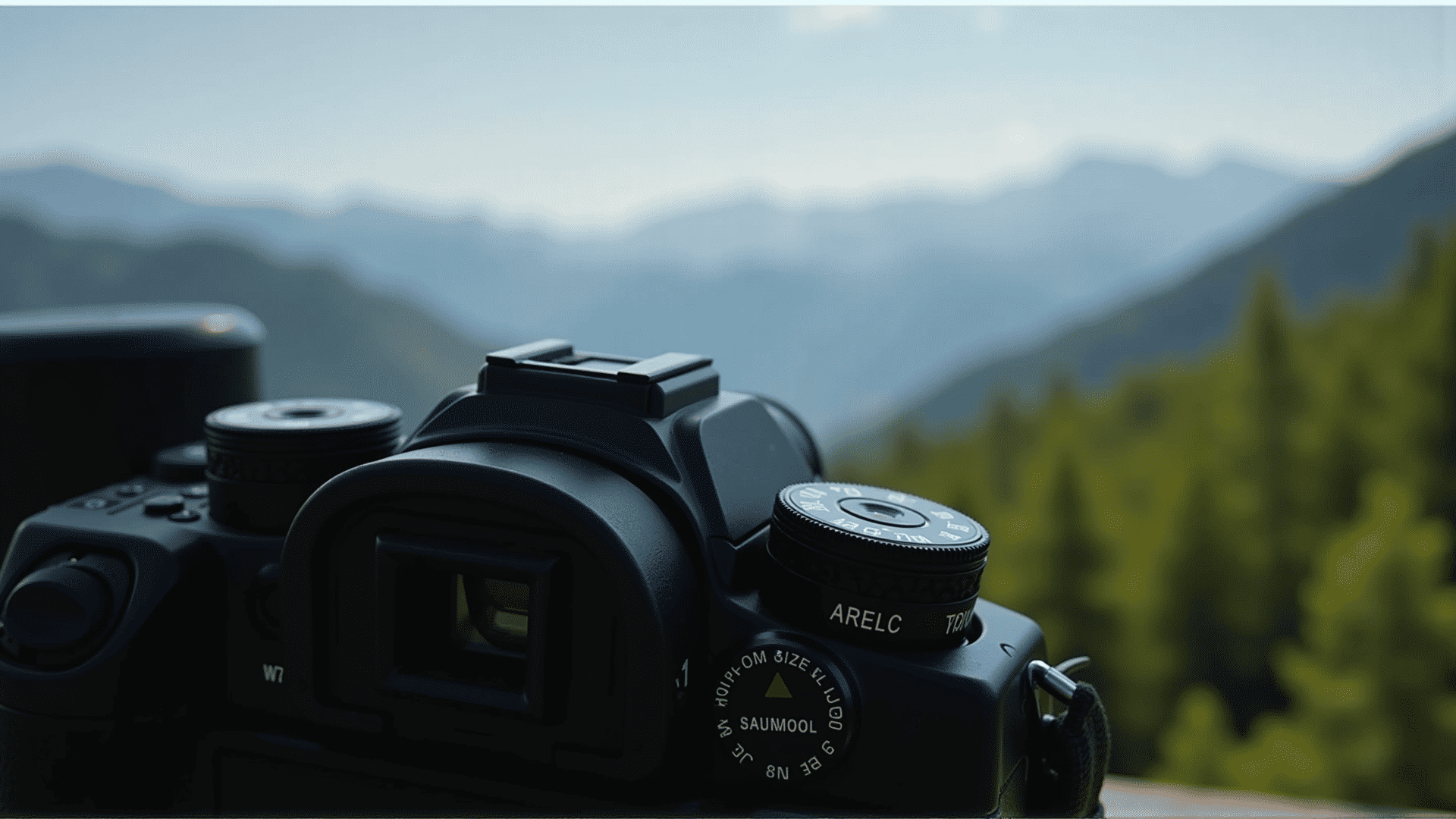
In the journey of capturing breathtaking photographs, understanding and mastering camera settings is a pivotal step. Whether you're a budding enthusiast or an experienced shutterbug looking to refine your skills, comprehending how to manipulate key settings like aperture and shutter speed can significantly enhance your photographic outcomes. Let's explore these essential components to elevate your photography in any condition.
Aperture: The Gateway of Light
Aperture refers to the size of the opening in the lens through which light enters the camera. It is measured in f-stops, such as f/2.8, f/4, f/5.6, etc. Smaller f-stop numbers indicate a larger aperture, allowing more light to reach the camera's sensor. This setting not only affects exposure but also controls the depth of field. A wider aperture (smaller f-stop number) creates a shallow depth of field, ideal for portraits where the subject is in sharp focus against a softly blurred background. Conversely, a narrower aperture (larger f-stop number) increases the depth of field, keeping more of the scene in focus, perfect for landscapes.
Shutter Speed: Capturing Movement
Shutter speed determines how long the camera's shutter remains open to allow light onto the sensor. It is measured in seconds or fractions of a second, such as 1/1000, 1/250, or 1". Fast shutter speeds help freeze motion, making them great for capturing subjects in action, like sports or wildlife. On the other hand, slow shutter speeds can capture motion blur, which can be artistically used to convey movement, such as flowing water or the bustling city streets. Be cautious of camera shake when using slower shutter speeds; a tripod can be a valuable tool to maintain stability.
ISO: Balancing Sensitivity
ISO measures the sensitivity of the camera's sensor to light. A lower ISO value, such as 100 or 200, means less sensitivity, ideal for bright conditions. Higher ISO values, like 1600 or 3200, increase sensitivity, useful in low-light situations but can introduce noise, affecting image quality. It’s crucial to balance ISO with aperture and shutter speed to achieve the desired exposure without compromising the clarity of the image.
White Balance: Achieving True Colors
White balance is responsible for ensuring that colors in your photos appear natural under different lighting conditions. Cameras often have preset white balance options for scenarios like daylight, cloudy, tungsten, and fluorescent lighting. Adjusting white balance can prevent unwanted color casts and achieve true-to-life colors in various environments.
Exposure Compensation: Fine-Tuning Brightness
This setting allows photographers to adjust the exposure level measured by the camera's meter. It’s useful in scenes with complex lighting where the camera might struggle to choose the correct exposure. By using exposure compensation, you can intentionally overexpose or underexpose a photo to suit the artistic vision.
Mastering Manual Mode
Switching to manual mode opens up a realm of creative control. It might appear daunting at first, but it allows you to independently manage aperture, shutter speed, and ISO. With practice, you'll be able to anticipate how changes to one setting will affect the others and the resulting image.
Conclusion
Understanding camera settings is a vital part of becoming a skilled photographer. By experimenting with aperture, shutter speed, and ISO, you can adapt to various lighting conditions and artistic challenges. Don’t shy away from trial and error; every picture taken is an opportunity to learn and improve. Whether the goal is freezing a moment in time or creating soft, artistic blur, mastering these settings is your key to capturing stunning images.